It is ten years since Britain voted for Brexit, but the Brexit wars still rage on.
IN SCOTLAND, SNP politicians never miss a chance to blame Brexit for the country’s economic woes. The Greens and LibDems eagerly agree. Labour offers more muted assent. Even the Scottish Conservatives remain compromised by their Davidson-era Remainer instincts: a party leadership far more Europhile than many ordinary Scottish Tory members, and often more Europhile than Conservatives south of the border. Davidson herself has now co-founded a centre-right pressure group aimed at countering Reform UK by dragging the Conservatives in a more pro-European direction.
Across this political class, the shared fantasy is that Scotland’s problems would be magically solved by rejoining the EU. It is the same mentality that sustains the SNP’s parallel delusion: that independence would fix everything. The nationalists simply conjoin the two fantasies, ignoring the awkward fact that an independent Scotland would be incapable of meeting the fiscal conditions for EU entry for a very long time, if ever.
Labour’s attachment to this Fata Morgana is stranger still, given the evidence of life inside and outside the EU.
The central Remainer claim is that Brexit has made Britain poorer. The Office for Budget Responsibility and others routinely cite a supposed 4 per cent hit to UK GDP. But this figure has no serious statistical authority. As Liam Halligan has pointed out, it is not an observed outcome but a collation of external pre-Brexit forecasts, many produced by organisations that backed Remain.
The real-world record is rather different. Since the 2016 referendum, the UK economy has grown by 12.9 per cent in total, outpacing France at 12.5 per cent, Italy at 10.3 per cent and Germany at just 6.3 per cent.

The same applies to trade. We were told exports would slump. Instead, the value of UK goods and services exports is up by a combined 45.2 per cent since mid-2016, again ahead of France, Italy and Germany. This includes non-EU trade – precisely where Brexit gave Britain room to act. Outside the EU customs union and common commercial policy, the UK has been able to strike deals with Australia, New Zealand, India, the Gulf states and, most significantly, the Trans-Pacific Partnership bloc, giving British goods and services preferential access to the fastest-growing region in the world.

Nor has trade with Europe collapsed. EU exports have barely shifted as a share of total UK goods and services exports, falling from 43.2 per cent before Brexit to 41.2 per cent.

This is what makes Starmer’s position so absurd. He has taken credit for post-Brexit trade wins with India, the United States, the Gulf states and South Korea — arrangements Britain could not have negotiated in that form inside the EU customs union. He boasts of gains made possible by the very independence his party now seems embarrassed to exercise.
The irony runs through domestic policy too. Several Labour measures would have been difficult, if not impossible, under EU constraints — from VAT on school fees to Rachel Reeves’s “Great British Summer Savings” programme.
More importantly, EU regulation has held member states back in sectors that will define the next generation of prosperity: biotech, artificial intelligence, satellites, agricultural genomics, financial services and more. Britain, by contrast, has the power to move faster, regulate more intelligently, and shape its own competitive advantages.
The problem is not that Brexit failed: the problem is that Britain’s political class failed Brexit.
Conservative governments from May to Johnson, Truss and Sunak made a hash of negotiating and implementing the settlement. May made Brexit unpassable. Johnson made it legally binding while denying its consequences. Truss prolonged the confrontation. Sunak tidied up parts of the mess without changing the underlying settlement that still has the abominable border in the Irish Sea.
Yet even through that incompetence, Brexit restored the central prize: the power to choose. Britain can recalibrate as a low-tax, low-regulation, high-productivity economy if it has a government with the courage and vision to do so.
Instead, Labour under Starmer is crawling back towards Brussels in the belief that “closer ties” will deliver the elusive growth he and his Chancellor have made the centrepiece of their economic strategy. And despite recent protestations that he will not make immediate EU re-entry a front-line policy, Andy Burnham’s language points in the same direction. His answer to Brexit is not to use independence better, but to dilute it.
The concessions Starmer has made, or proposed, are extraordinary.
At the May 2025 UK-EU summit, he gave away control over British waters by agreeing to maintain full reciprocal fishing access until 30 June 2038, worth approaching £9 billion to the EU. To soften the political blow, £360 million was put into a Fishing and Coastal Growth Fund. In other words: Brussels keeps access; Britain gets compensation.
He has agreed to work towards a youth experience scheme covering work, study, au-pairing, volunteering and travel. He has also committed to reinstating the Erasmus scheme in place of the much cheaper Turing scheme for student exchanges. In both cases, the likely effect is obvious: many more EU citizens coming to the UK than UK citizens going to the EU. Erasmus alone is expected to cost £570 million for 2027-28.
His government has also agreed to become an EU rule-taker on food, plants and animal products, including acceptance of European Court of Justice jurisdiction in some of these areas. This is the old Brussels bargain in miniature: a little less friction at the border, in exchange for a little less democracy at home.
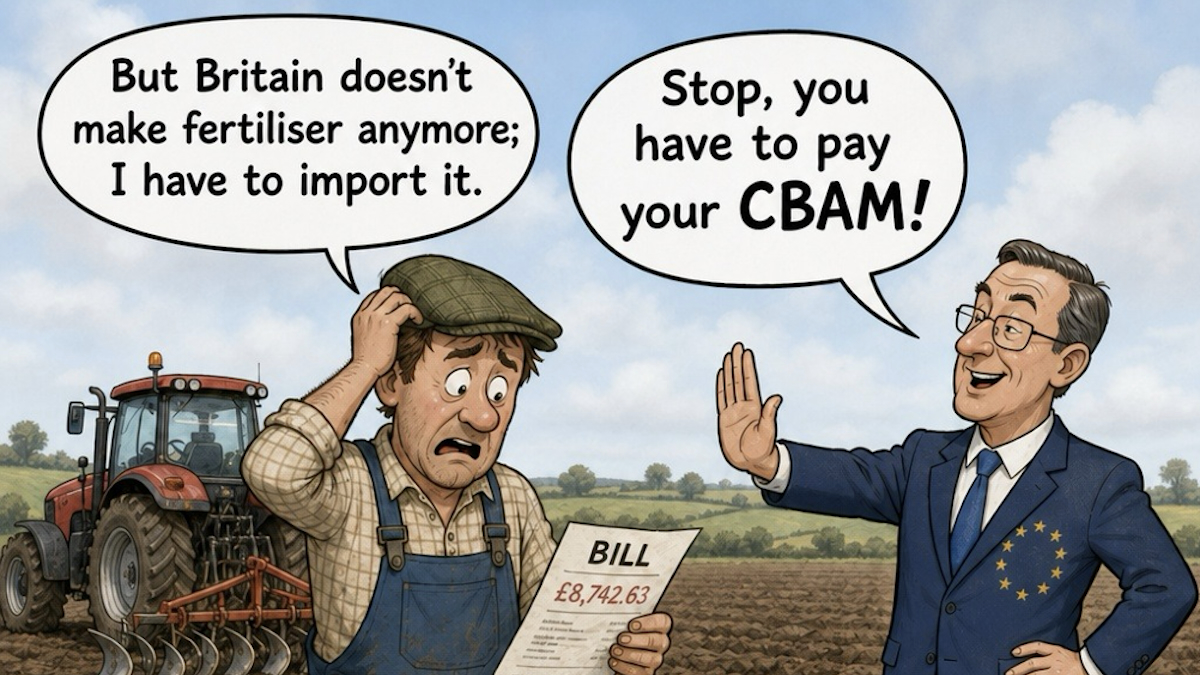
The EU and UK have also been working to link their emissions trading systems, tying UK carbon pricing more closely to the EU system. The UK is seeking to re-enter the EU’s internal electricity market, which means accepting EU market rules in energy. Both initiatives risk pushing up costs for British consumers and businesses.
Starmer’s reset has also opened the way for closer UK participation in EU defence procurement, potentially at significant cost. Once again, Britain is invited to pay into European structures while remaining outside the room where the rules are made.
What do voters make of all this? The polling is more complicated than the Remain lobby admits.
Ask a simple “rejoin or stay out” question and rejoin often leads. But introduce conditions, trade-offs, or non-rejoin alternatives, and support falls sharply. Opinium found only around a third of voters wanted to rejoin, with a larger share preferring to remain outside in some form. YouGov found support falls from a headline majority to minority support if rejoining means giving up Britain’s previous opt-outs.
Even in Scotland, where opinion is more pro-European than across Britain as a whole, the most consensual position is not necessarily full re-entry. Polling suggests stronger support for a closer relationship with Europe without rejoining the EU, single market or customs union.
Voters may want smoother trade. They may want warmer relations. They may dislike aspects of the Brexit settlement negotiated by the Conservatives. But that is not the same as wanting Britain marched back into the EU by stealth, one concession at a time.
Brexit wars may still be raging in our politics, but the dividing line is no longer between a glorious Brexit and a glorious return. It is between those who understand self-government as a responsibility, and those who treat Brussels as an excuse to excuse their own failings in government.
The tragedy of Brexit is not that Britain left the EU. It is that successive governments lacked the nerve, imagination and discipline to use the freedoms Brexit restored. The answer to Conservative failure is not Labour surrender. Nor is it the SNP’s infantile fantasy that Scotland can escape its own governing failures by swapping Westminster dependency for Brussels dependency.
Starmer’s EU reset is no growth strategy. It is managed retreat: fish, law, regulation, energy, migration and money slowly handed back, piece by piece, while ministers pretend this is pragmatism rather than capitulation. The public may want better relations with Europe. They do not want the referendum reversed by stealth.
Britain does not need to crawl back into the EU’s orbit to prosper. It needs lower taxes, lighter regulation, cheaper energy, serious borders, global trade and a government prepared to act like regaining sovereignty is an opportunity rather than an embarrassment. Brexit gave us the chance to choose our own future. The scandal is that our political class still seems terrified of doing so.
From 2017-22 Linda Holt was a Councillor in Fife where she now runs a small business. She is the managing editor of The Reformer.
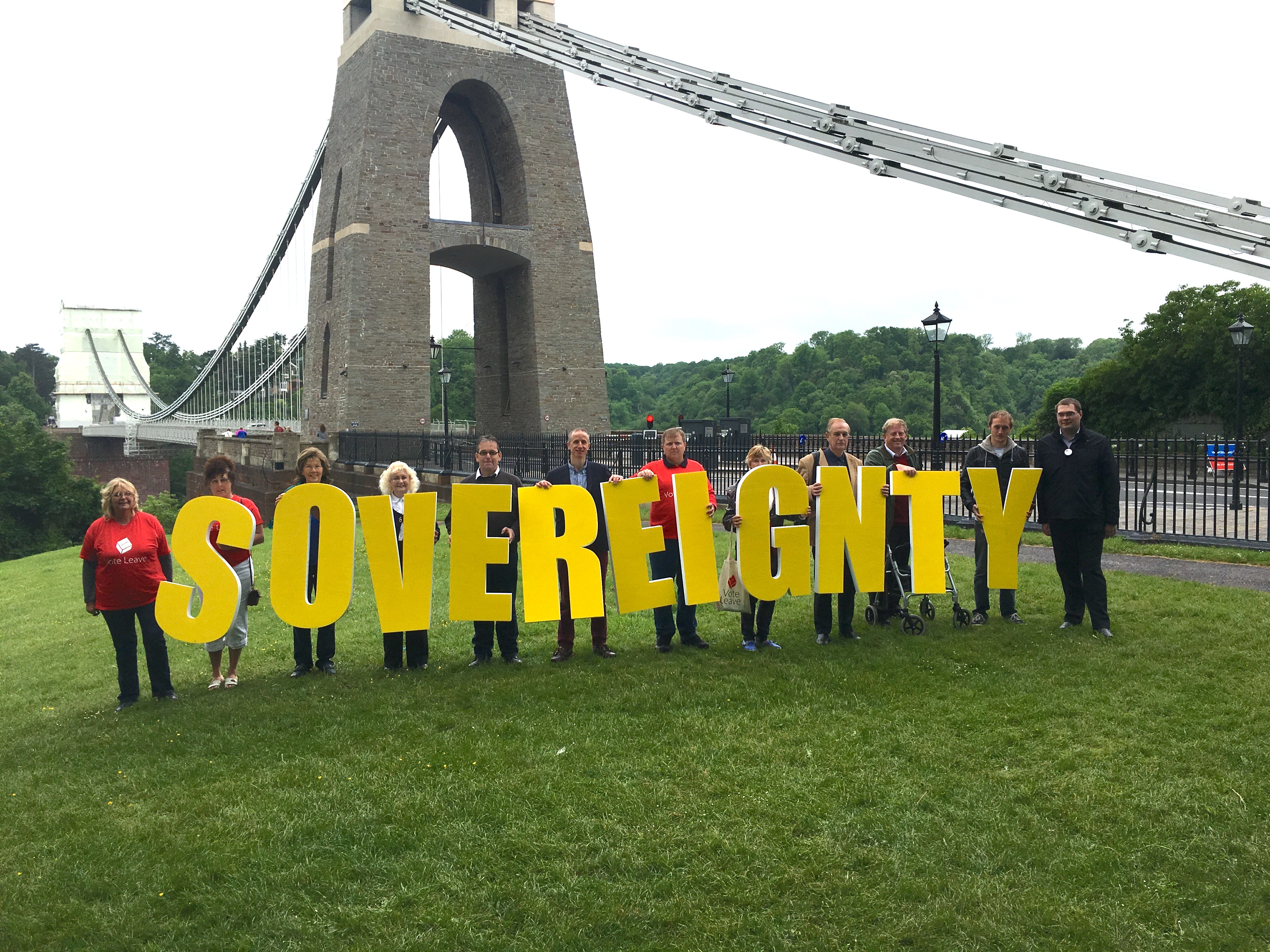
Photo courtesy of Leave.eu from its 'Words of Hope' campaign, taken at the Clifton Suspension Bridge originally designed by Isambard Kingdom Brunel.